Whole systems, modelled end to end.
Deep dives into complete engineering systems built on DjiniousLab — every subsystem, simulation, and validation gate on one living digital replica.
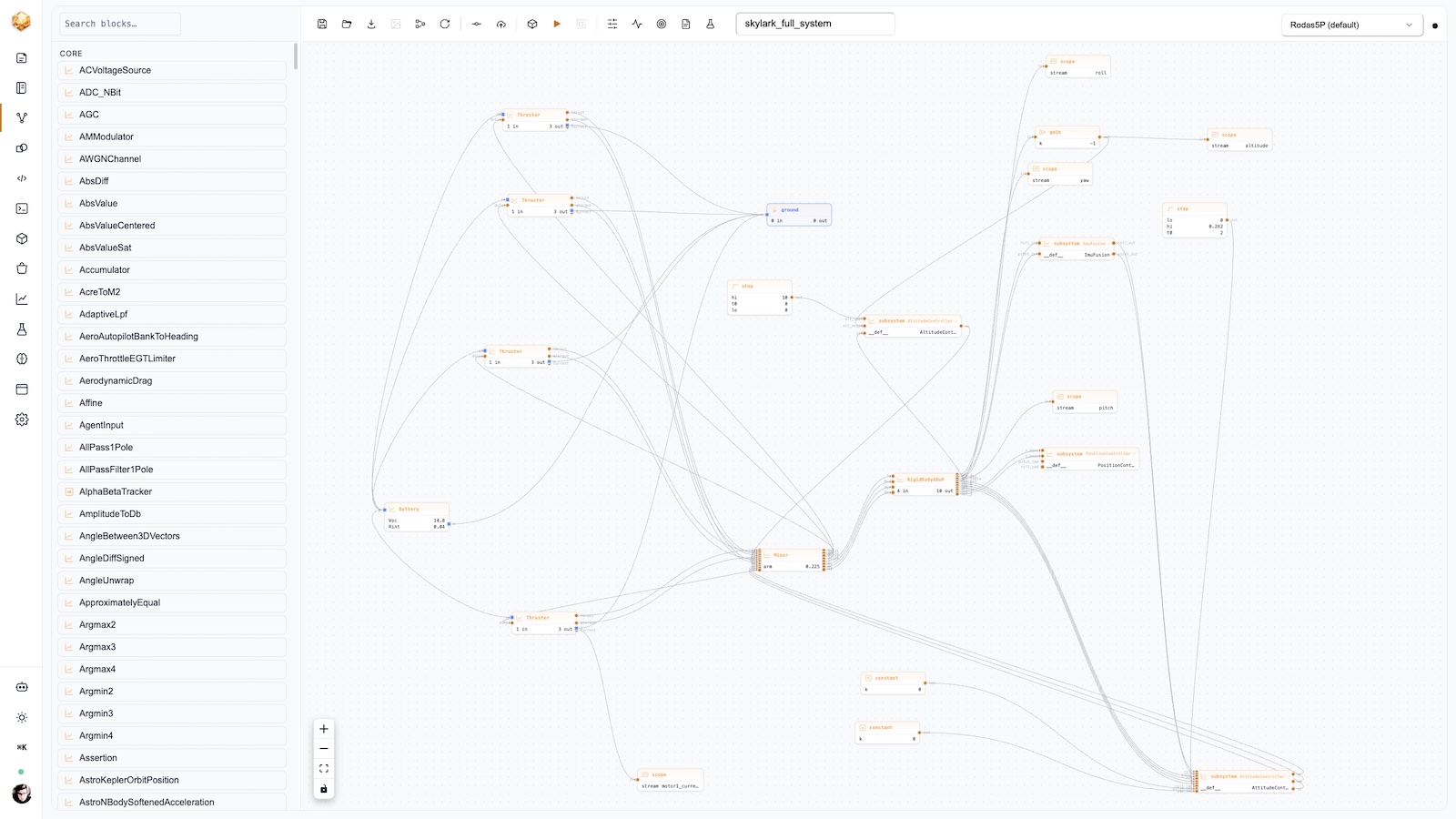
Djinborn T4 quadcopter
A 450-class survey drone as one multibody composition — airframe, propulsion, sensors, and a cascaded autopilot flying a closed-loop 6-DoF mission.
Read the case study →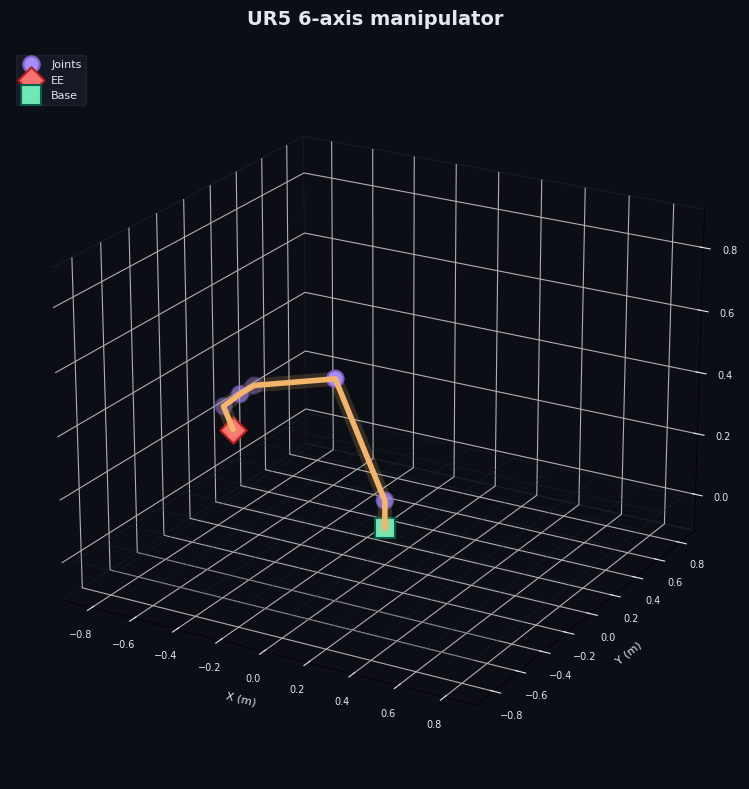
UR5 6-axis manipulator
A spatial 6-DoF UR5 arm as one multibody model — closed-form inverse kinematics driving a Cartesian end-effector path through per-joint PD control with gravity feedforward.
Read the case study →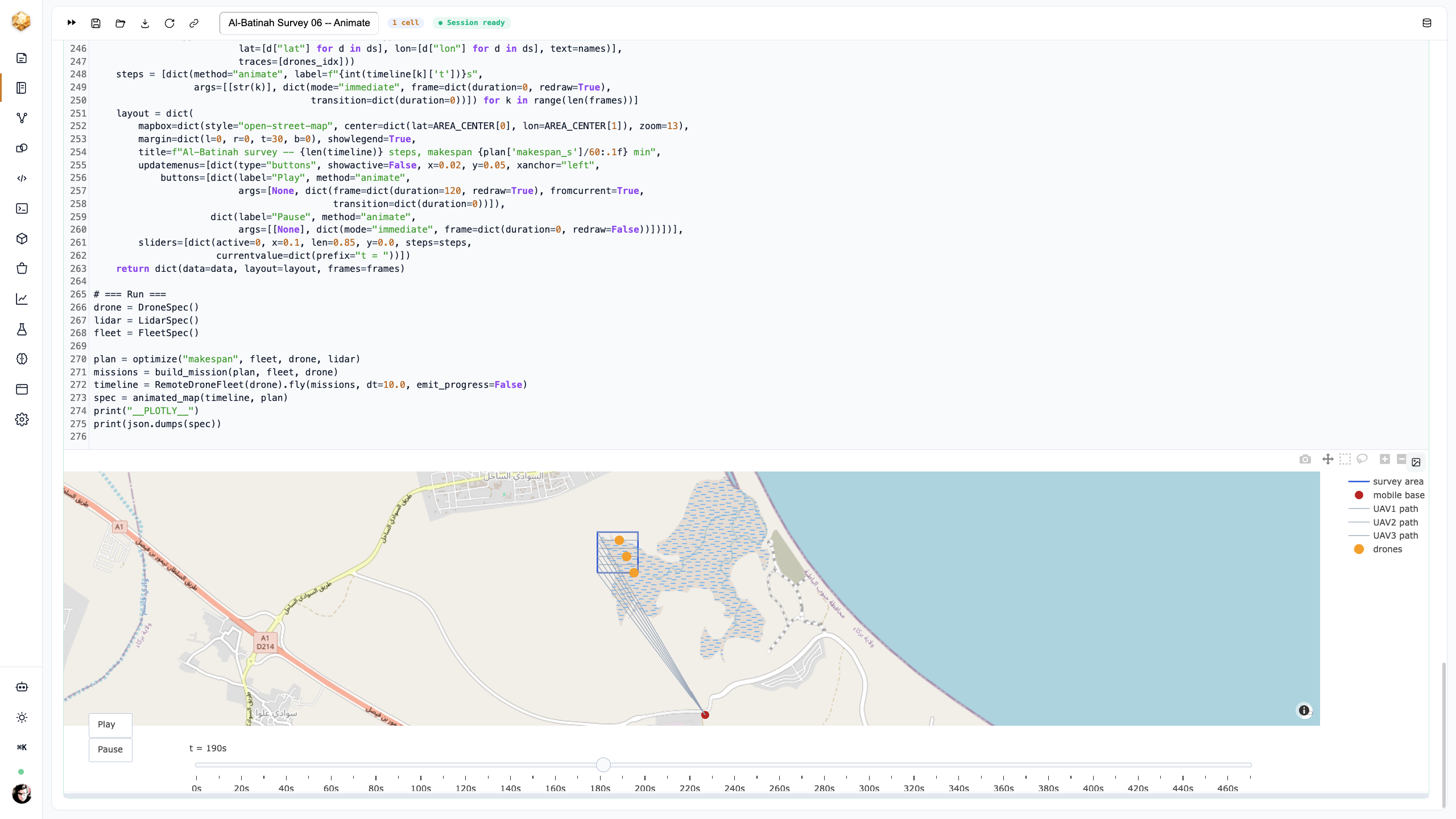
Al-Batinah UAV LiDAR survey
Plan and optimise a LiDAR drone-fleet survey of a 500 × 500 m site in Oman — tune the mission to your fleet, drone and sensor specs, then drive an optimal mission against a simulated UAV fleet on an animated map.
Read the case study →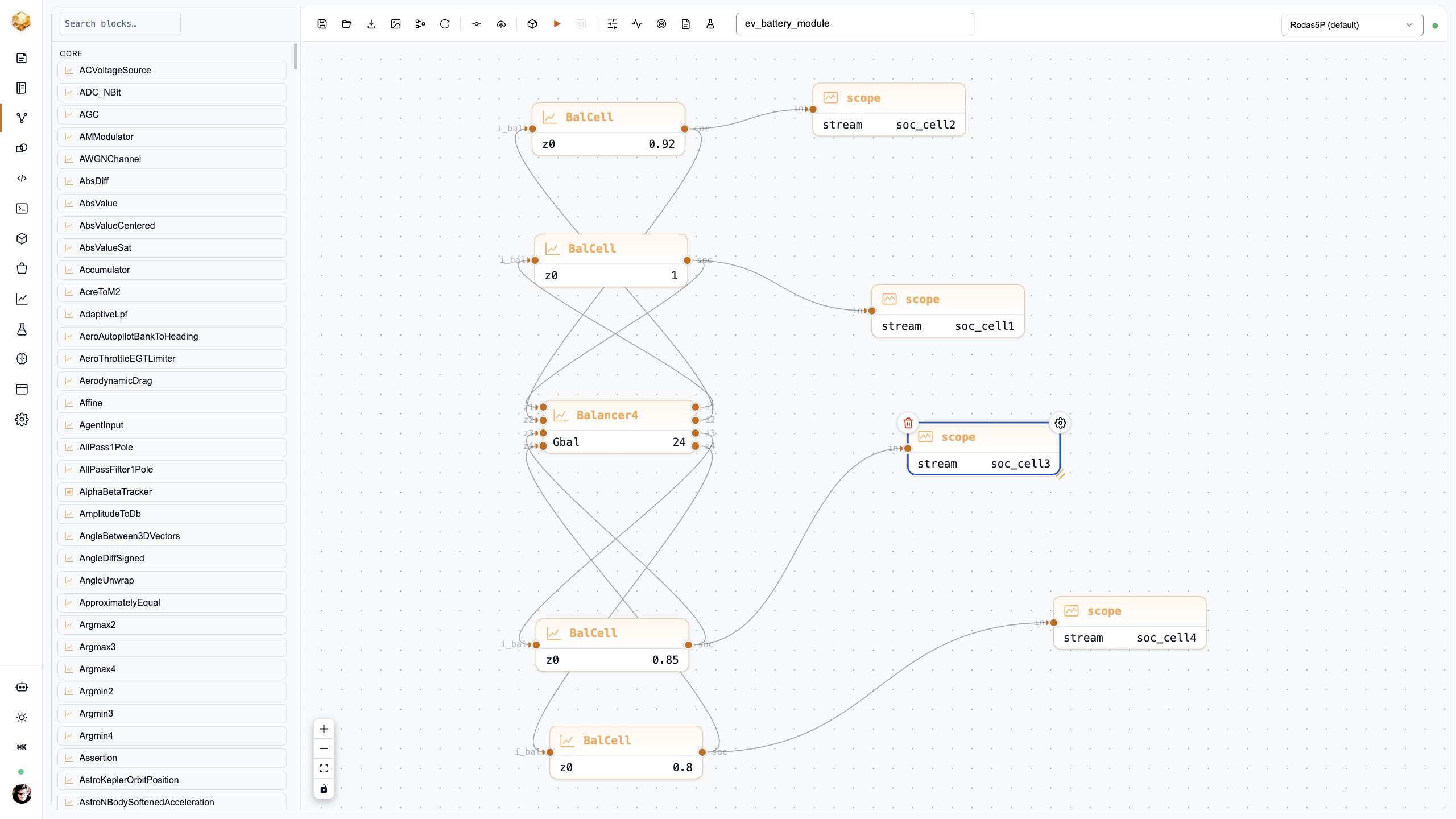
EV battery pack
An electric-vehicle battery pack as one multi-domain model — equivalent-circuit cells, a coupled thermal network, a CC-CV charge controller and an active balancer, composed cell → module → pack and run end to end.
Read the case study →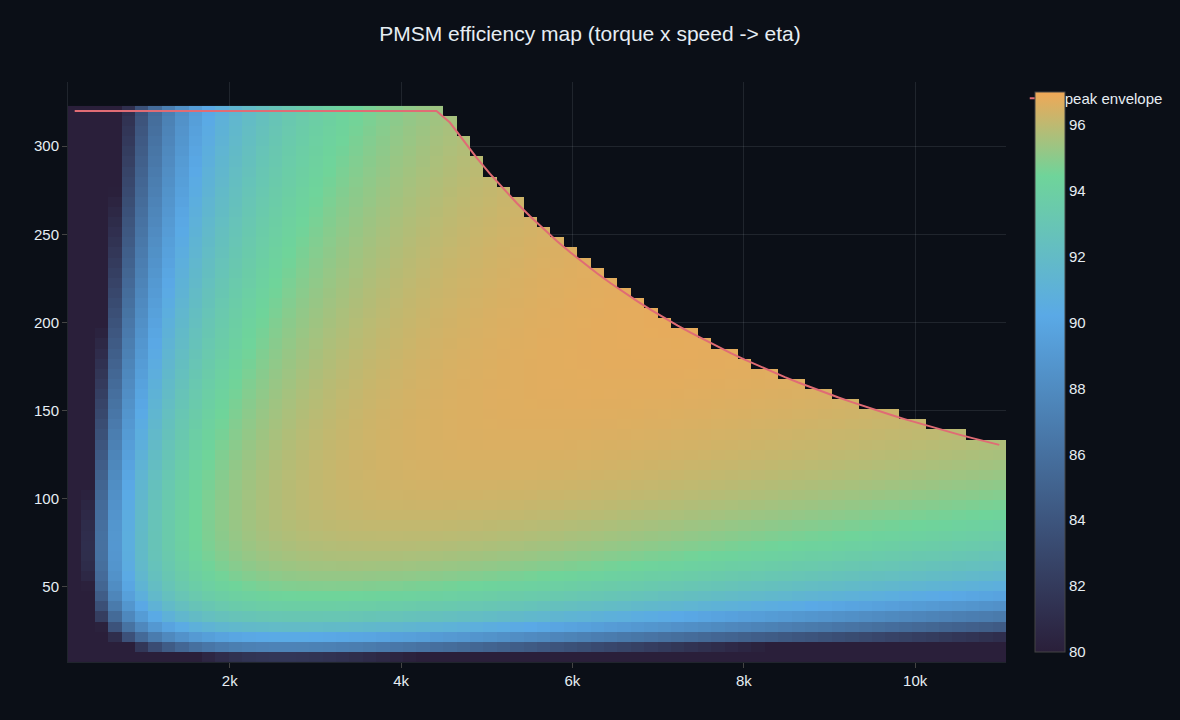
Full EV vehicle
The battery pack you sized becomes the car you drive — a complete electric vehicle over the WLTP cycle: drive cycle, traction motor, regen, the battery over the cycle, thermal, and the numbers that sell a car — range, consumption, and 0–100.
Read the case study →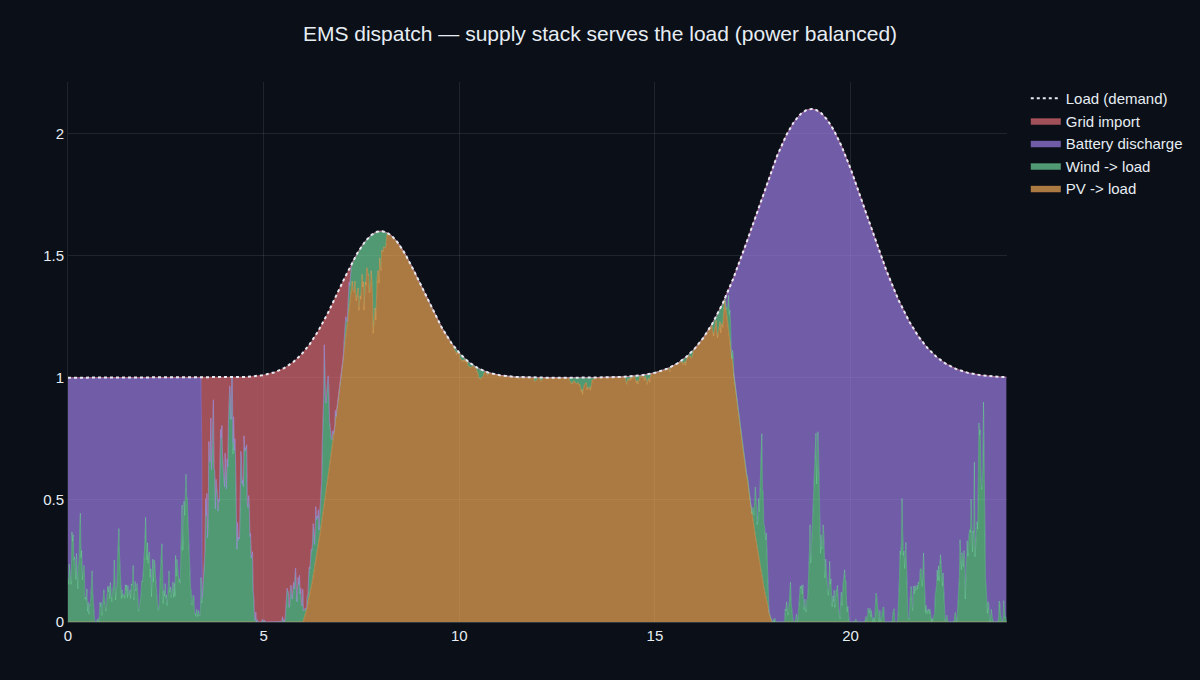
Microgrid
Solar PV + wind + battery + grid-tie serving a load as one system under an energy-management controller — composed on a DC bus and run over a day: dispatch, self-sufficiency, peak-shaving, sizing, and islanded stability.
Read the case study →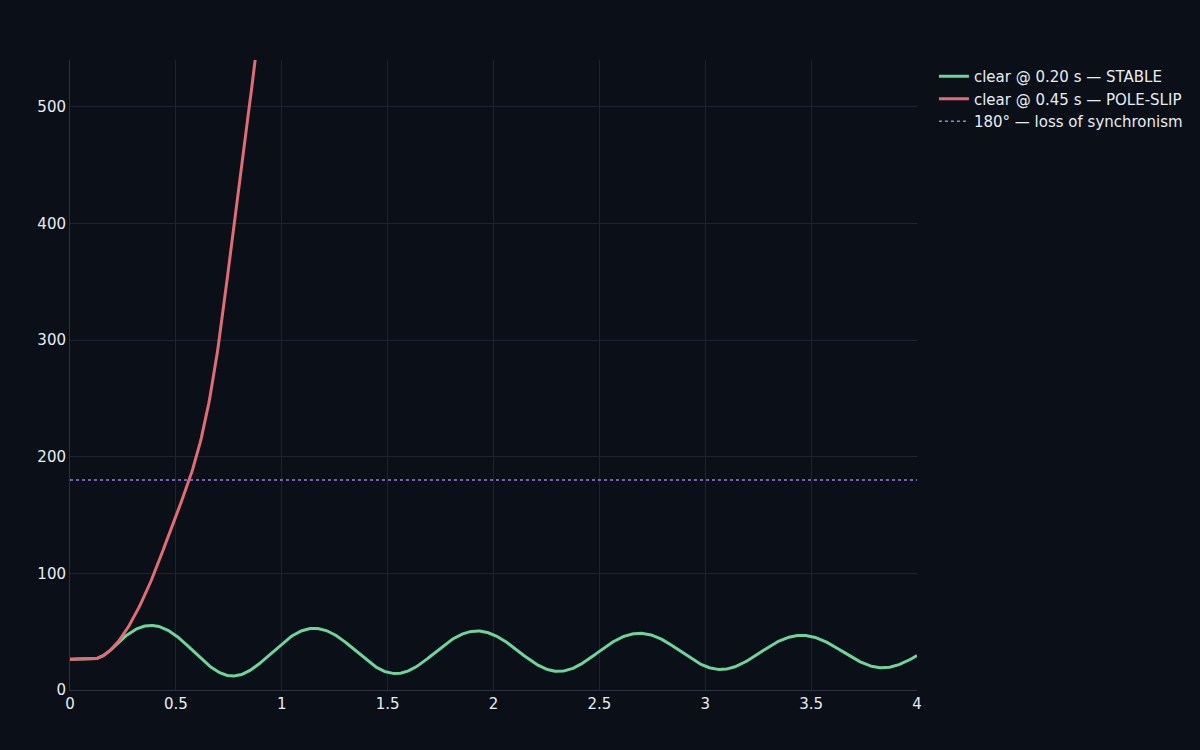
AC grid stability
Does the grid survive the fault? Synchronous machines whose rotor angles must stay in step, a three-phase short circuit, and the critical clearing time that separates a recoverable swing from a blackout — the swing equation, the equal-area criterion, multi-machine stability, and the low-inertia renewables concern.
Read the case study →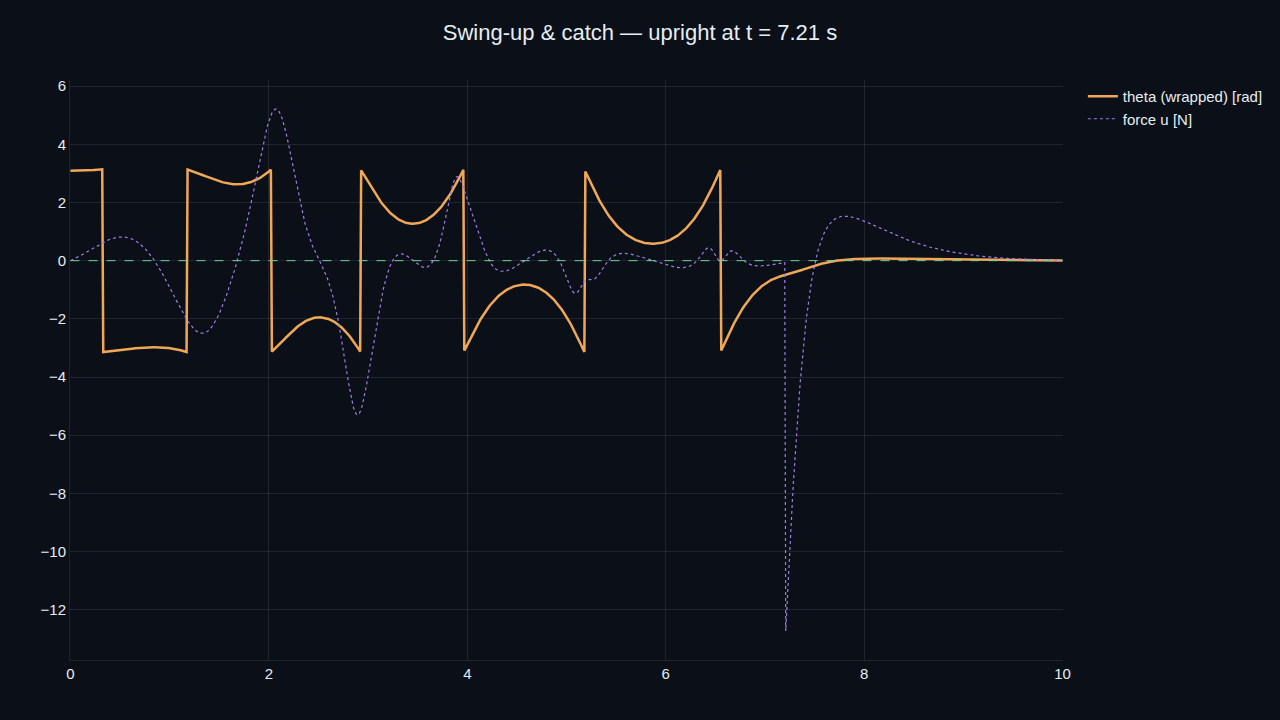
Cart-pole control & RL
The canonical underactuated-control benchmark, taken end to end — nonlinear dynamics, an LQR that stabilises the inverted pole, energy swing-up, a model-free reinforcement-learning policy, and a Monte-Carlo robustness gate.
Read the case study →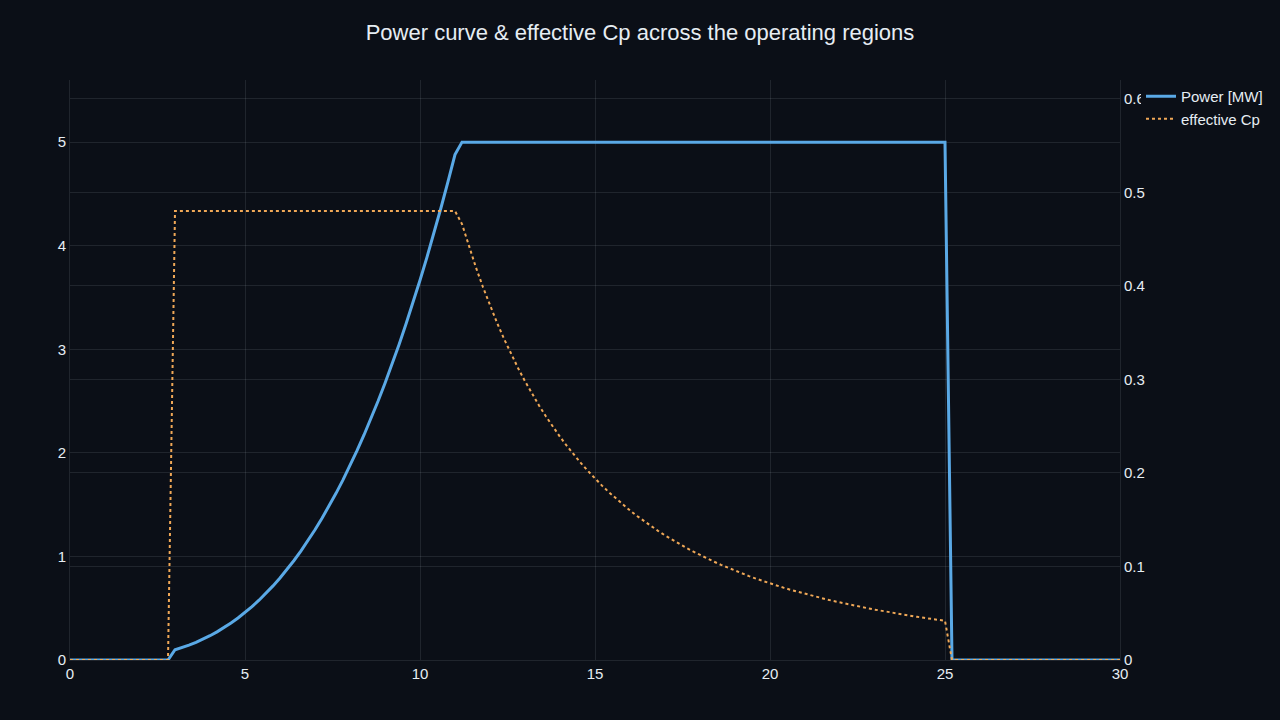
Wind turbine & farm
A multi-megawatt wind turbine and its farm — rotor aerodynamics, a two-inertia drivetrain, MPPT torque and pitch control, turbulent-load analysis, and a wake-optimised farm layout that lifts annual energy 18%.
Read the case study →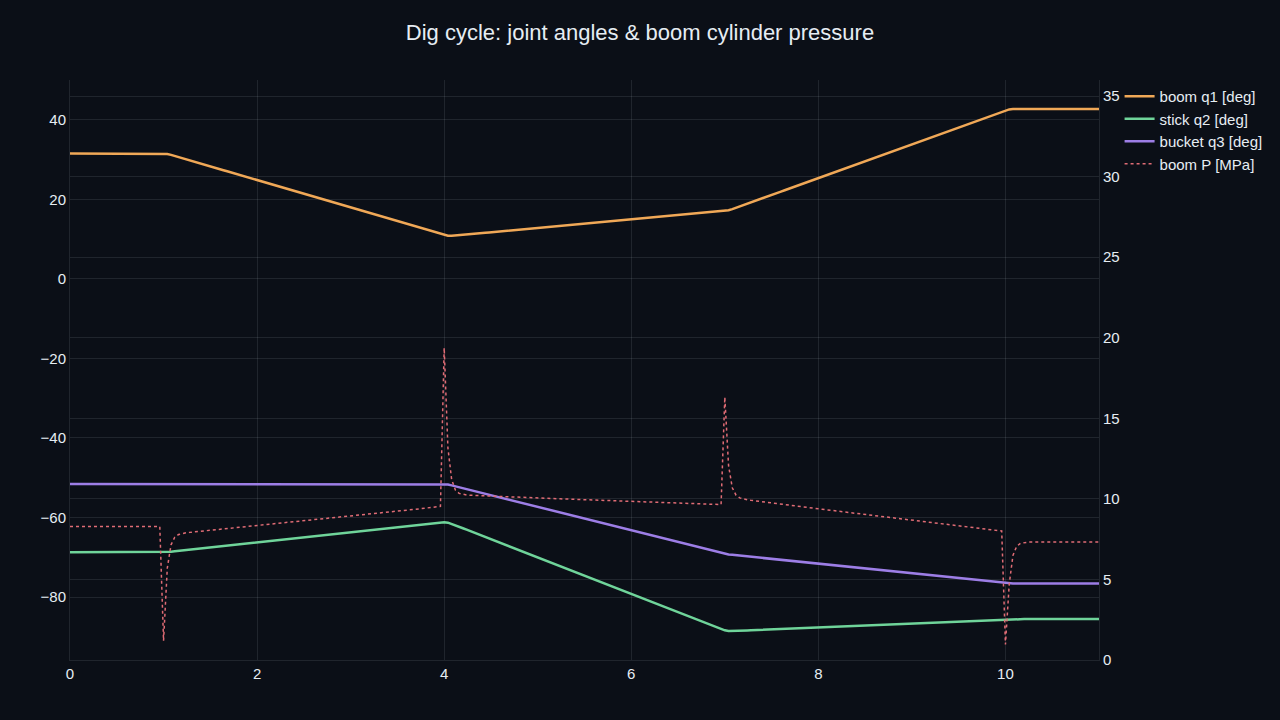
Hydraulic excavator
A 20-tonne excavator as one multi-physics model — a planar boom/stick/bucket linkage driven by hydraulic cylinders off a load-sensing pump, from kinematics and workspace through a coupled dig cycle to breakout force and cycle energy.
Read the case study →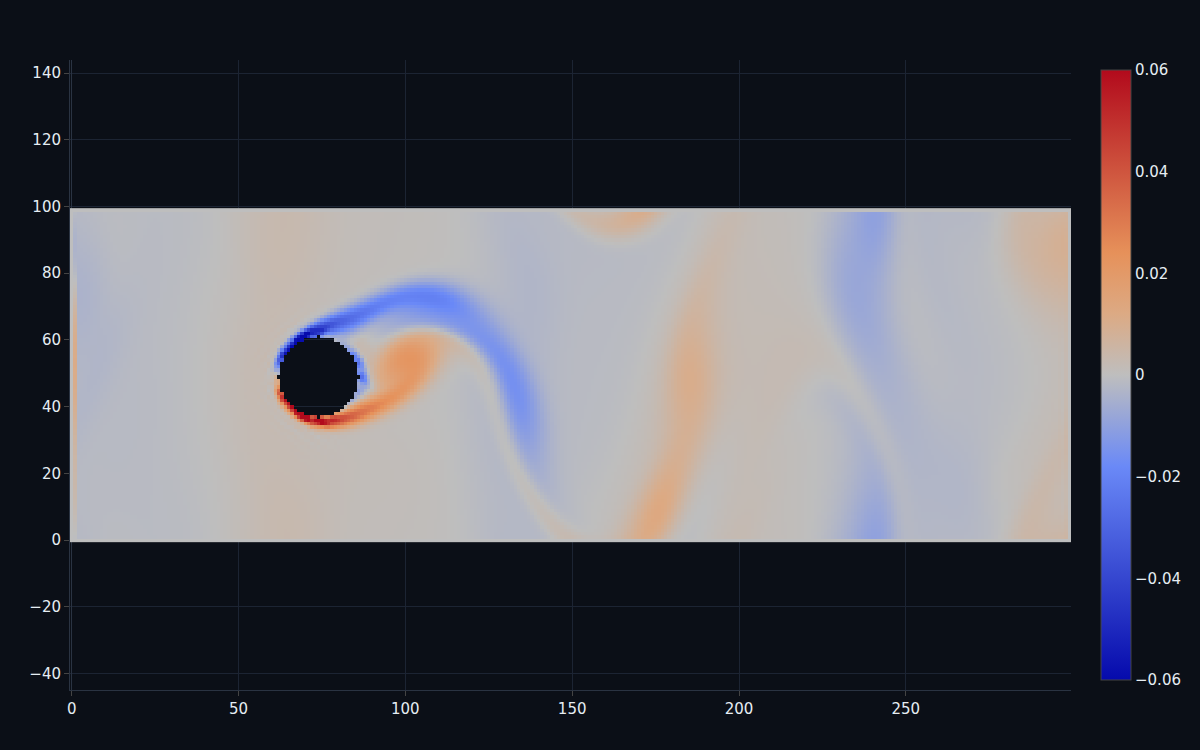
Computational fluid dynamics
Solving a partial differential equation on a grid — a velocity field over space and time. A self-contained Lattice-Boltzmann solver reproduces the most iconic result in fluid dynamics: the von Kármán vortex street shed by flow past a cylinder, validated on channel flow, the Strouhal number, drag and lift, and a lid-driven cavity.
Read the case study →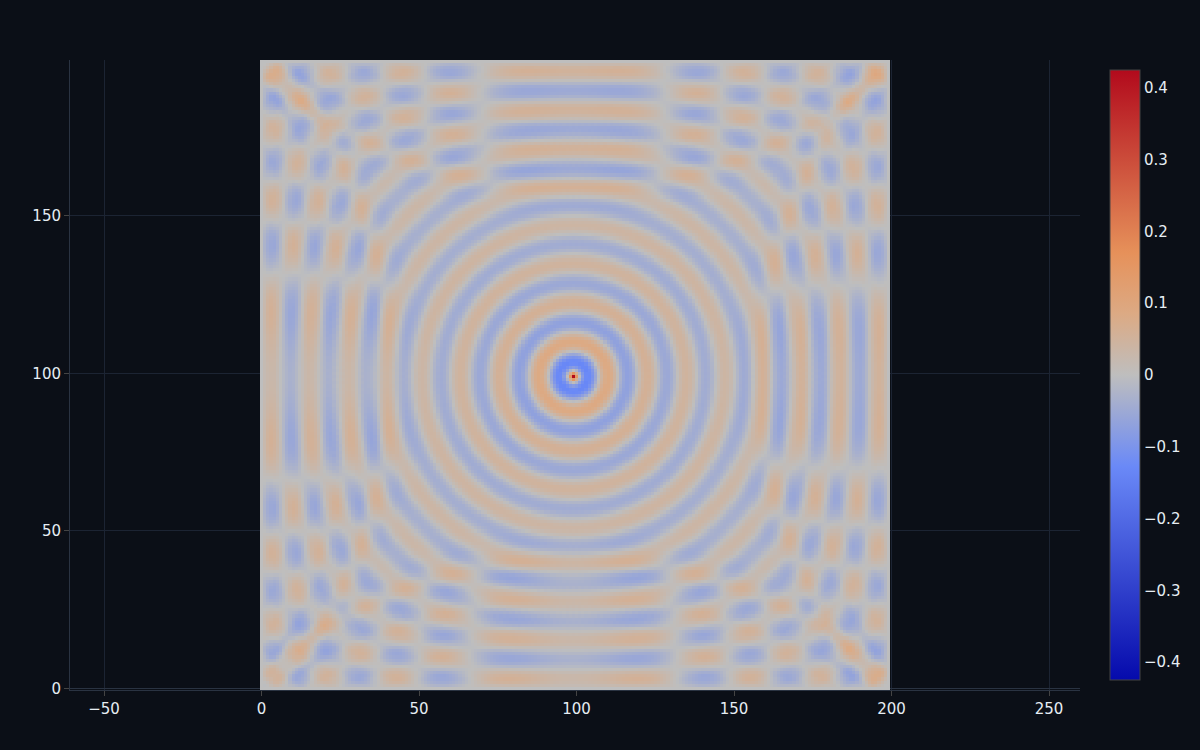
Electromagnetics (FDTD)
Solving Maxwell's equations on a grid — the electric and magnetic fields leapfrogging through space and time. A self-contained FDTD solver reproduces the canonical wave phenomena: radiation, refraction, diffraction, scattering and cavity resonance. The field-solver sibling to CFD, in electromagnetics.
Read the case study →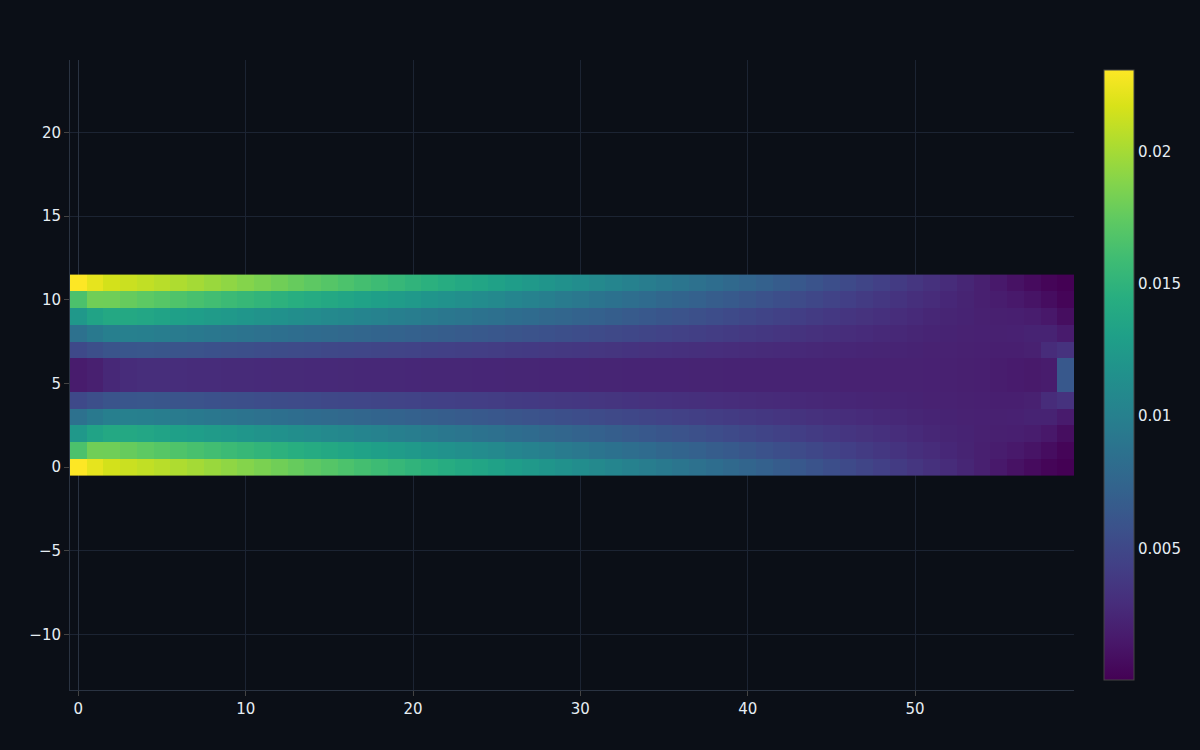
Structural FEA & modal
The most-used simulation tool in engineering — discretize a structure into elements, solve for displacement and stress under load, and pull out its natural frequencies and mode shapes from an eigenvalue problem. Cantilever stress, mesh convergence, modal analysis, stress concentration, buckling and a real bracket.
Read the case study →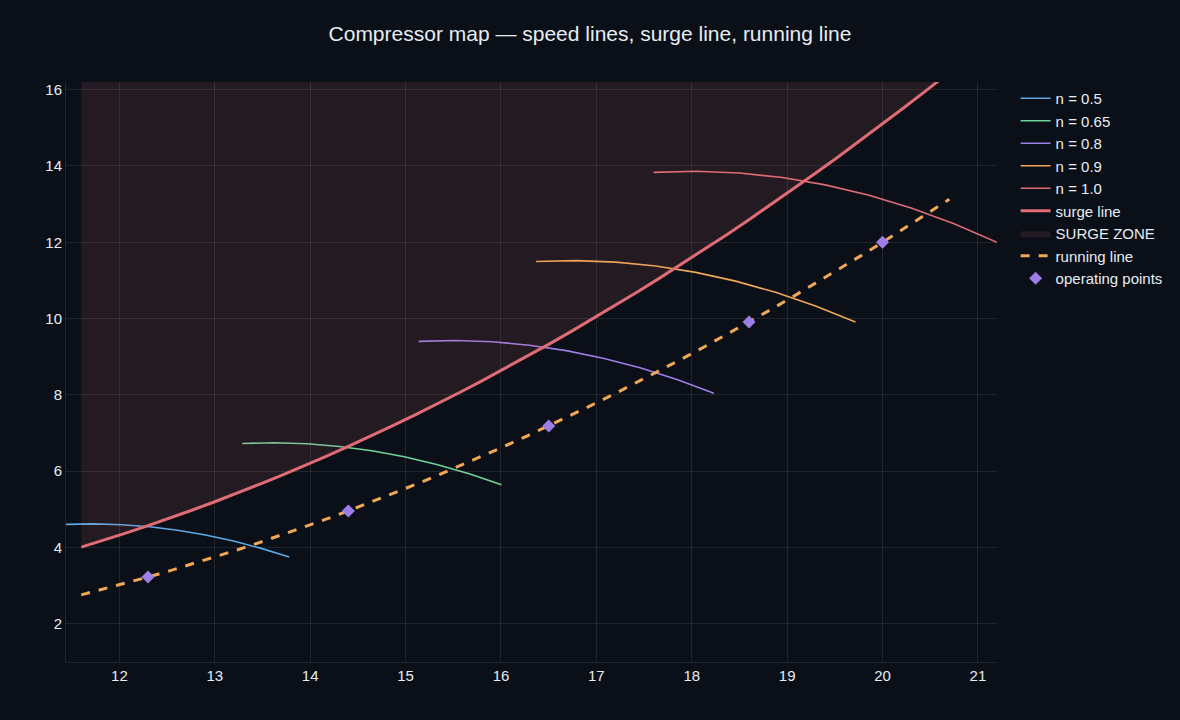
Gas turbine / jet engine
A single-spool turbojet on the Brayton cycle — compressor map, combustor and turbine work balance, nozzle thrust, the acceleration-surge failure mode, and off-design altitude lapse, all from first principles.
Read the case study →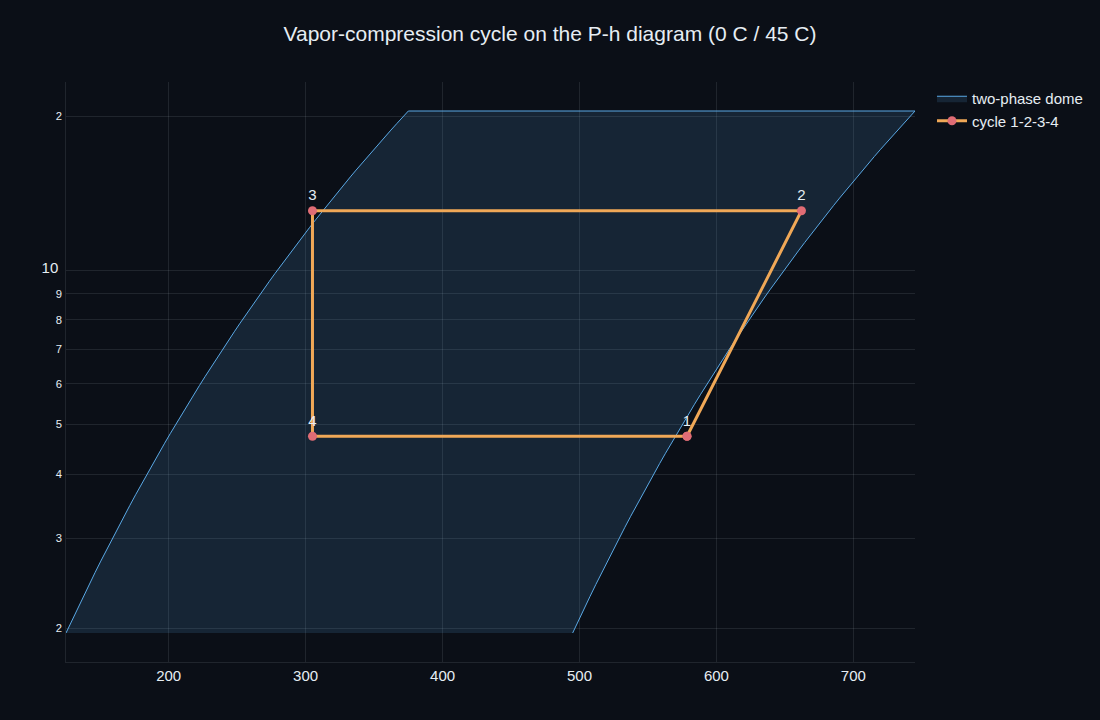
Heat pump
A vapor-compression heat pump on the refrigerant cycle — the P-h diagram, compressor and heat exchangers, the COP and its Carnot limit, how COP falls with temperature lift, and the seasonal SCOP that beats resistance heat fourfold.
Read the case study →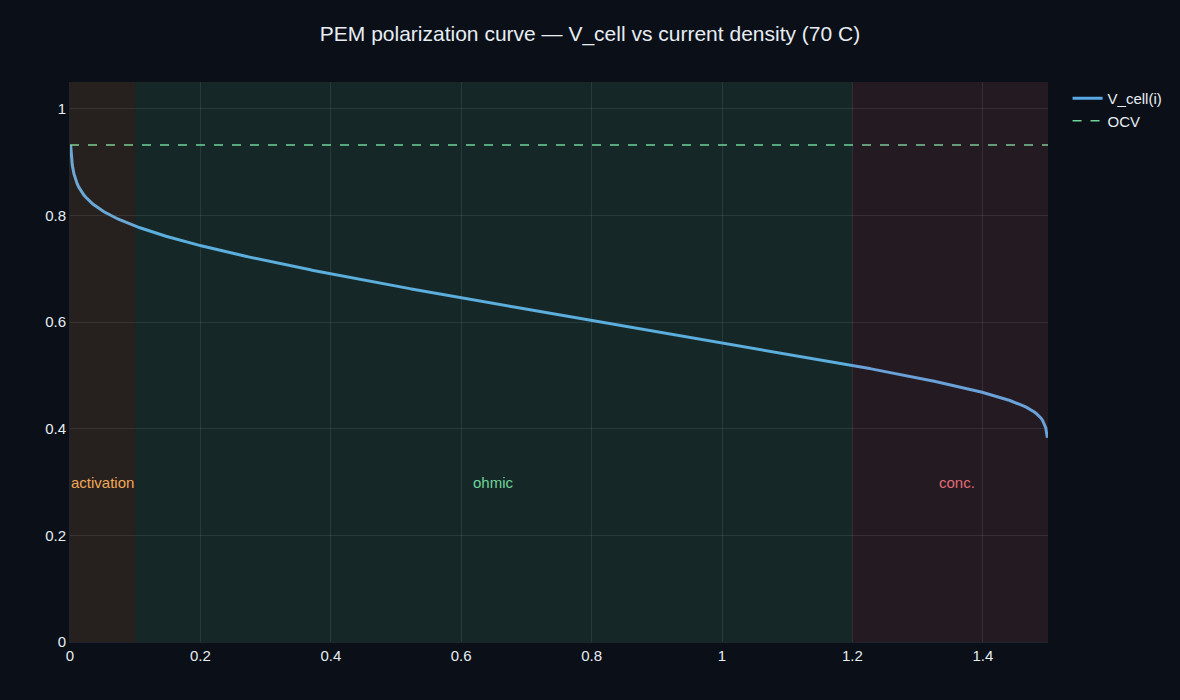
Hydrogen fuel cell
A PEM fuel cell from the electrochemistry up — the polarization curve and its three overpotentials, power and efficiency, an automotive stack, hydrogen consumption, thermal management, and dynamic load response.
Read the case study →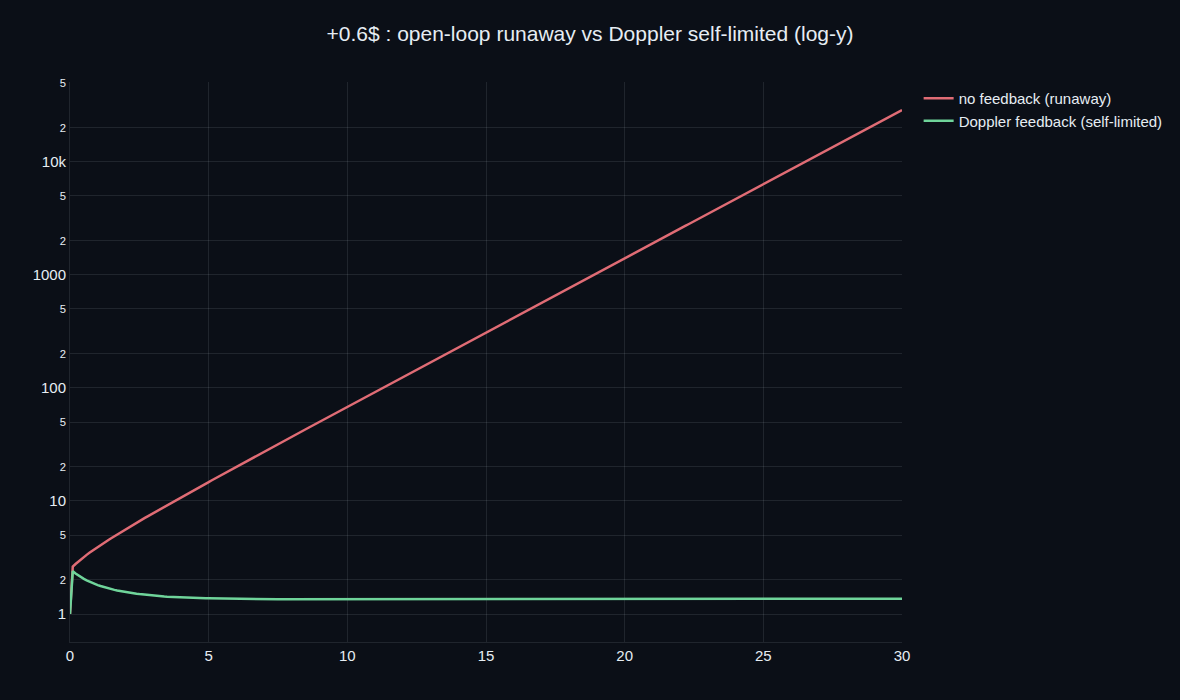
Nuclear reactor
A reactor's neutronics from first principles — six-group point kinetics with Doppler feedback and xenon-135: the prompt jump, the prompt-critical cliff, self-limiting power excursions, the post-shutdown iodine pit, load-follow, and SCRAM.
Read the case study →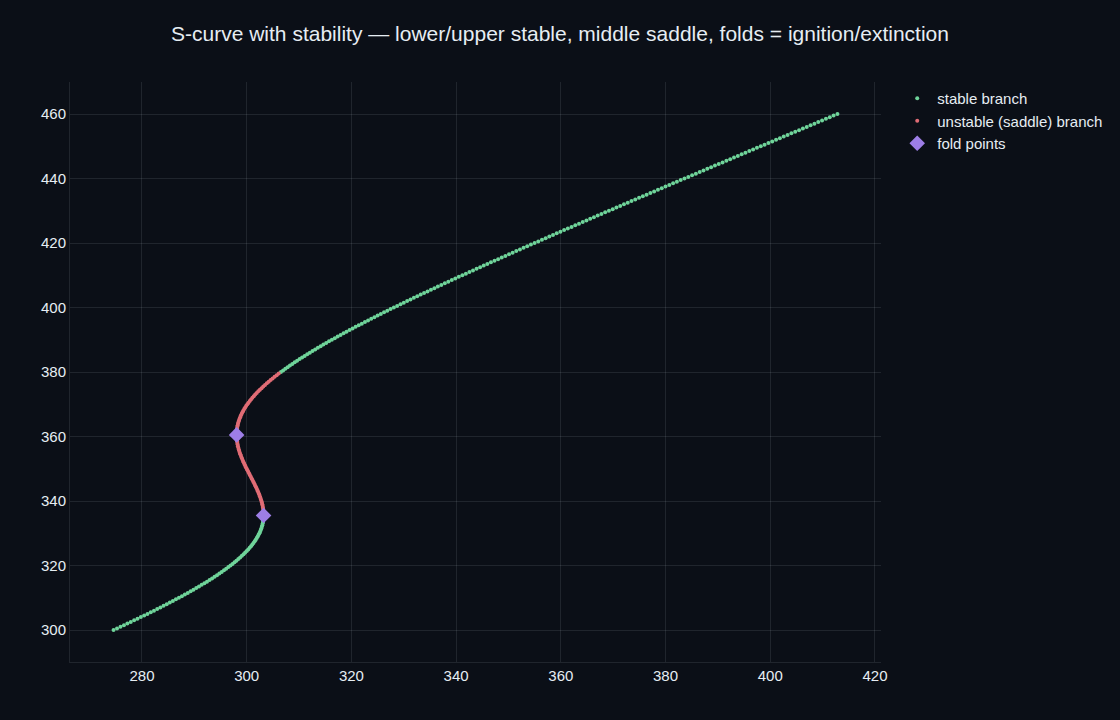
Chemical reactor (CSTR)
An exothermic stirred-tank reactor and its nonlinear-dynamics zoo — steady-state multiplicity, ignition/extinction hysteresis, sustained limit-cycle oscillations, thermal runaway, and the feedback control that tames an open-loop-unstable operating point.
Read the case study →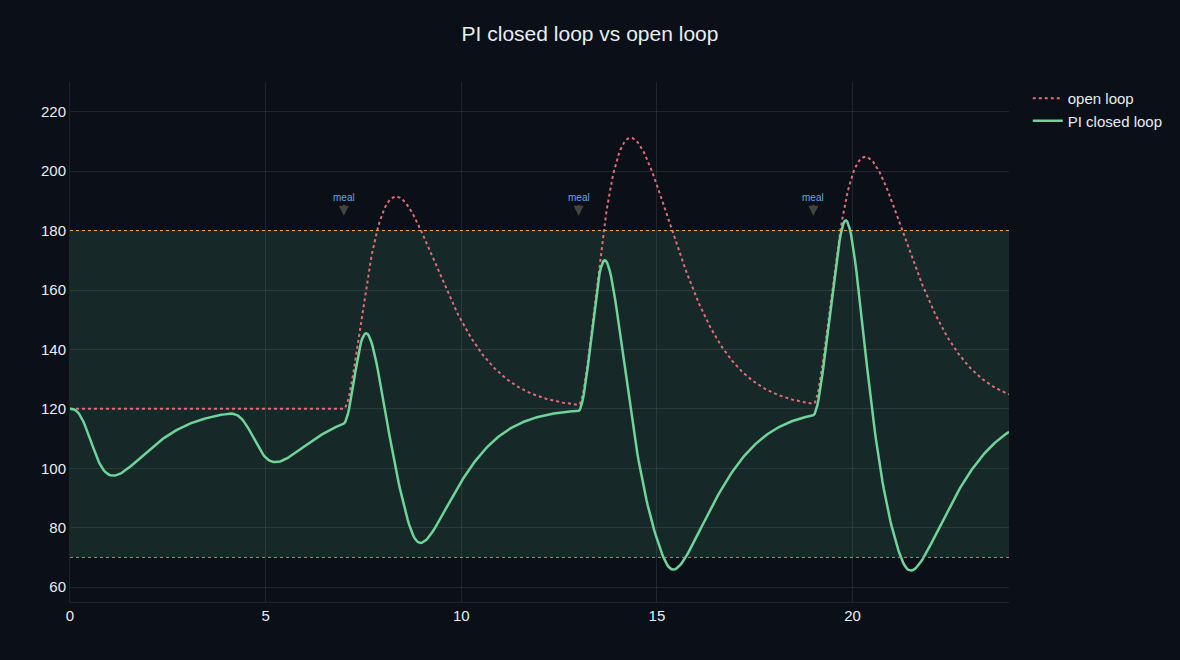
Artificial pancreas
A closed-loop insulin controller on a glucose-insulin physiology model — taming post-meal spikes while never causing a hypo: the meal challenge, the hypoglycemia trap, a low-glucose-suspend safety layer, and a virtual-patient cohort.
Read the case study →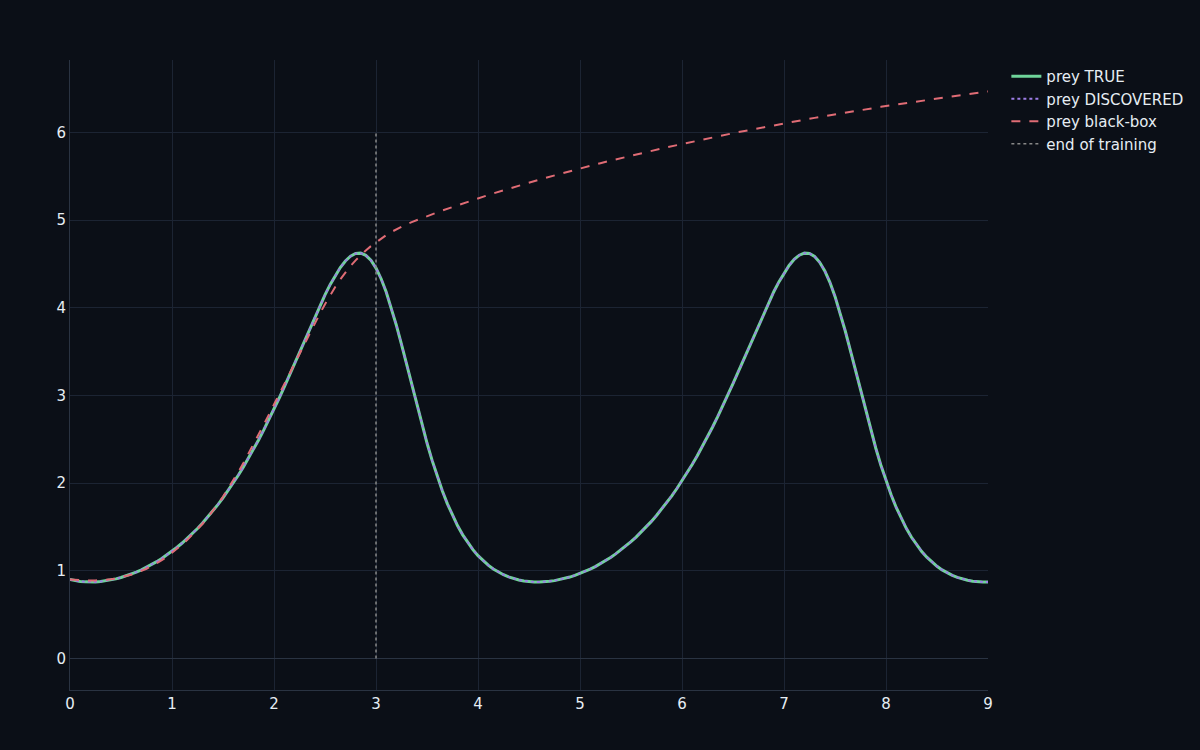
Scientific ML (UDEs)
Discovering missing physics from data with Universal Differential Equations — keep the physics you know, learn the gap with a neural network trained through the ODE solver, then read the learned term back as a symbolic equation that extrapolates where a black box can't.
Read the case study →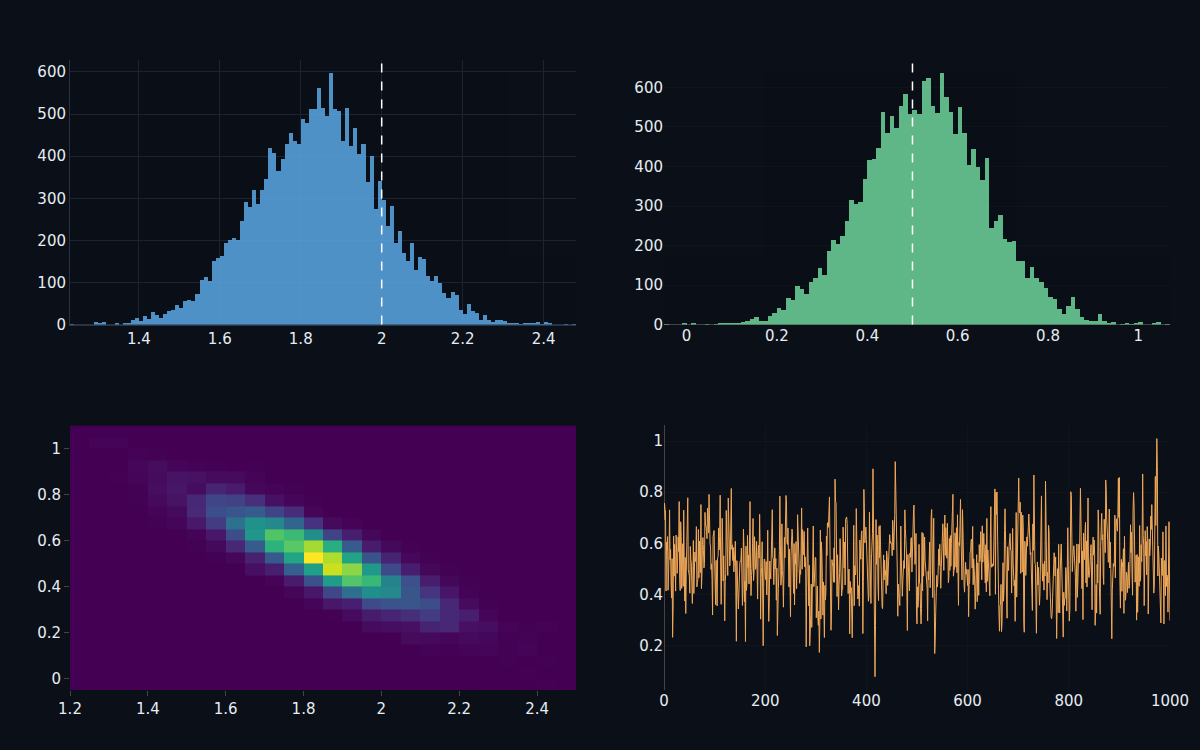
Bayesian inference & UQ
Not a single answer — a distribution over answers, with calibrated confidence. Markov-Chain Monte Carlo fits a model to noisy data and quantifies how sure you should be: posteriors that match the closed form where one exists, credible bands on predictions, model comparison, and a coverage check.
Read the case study →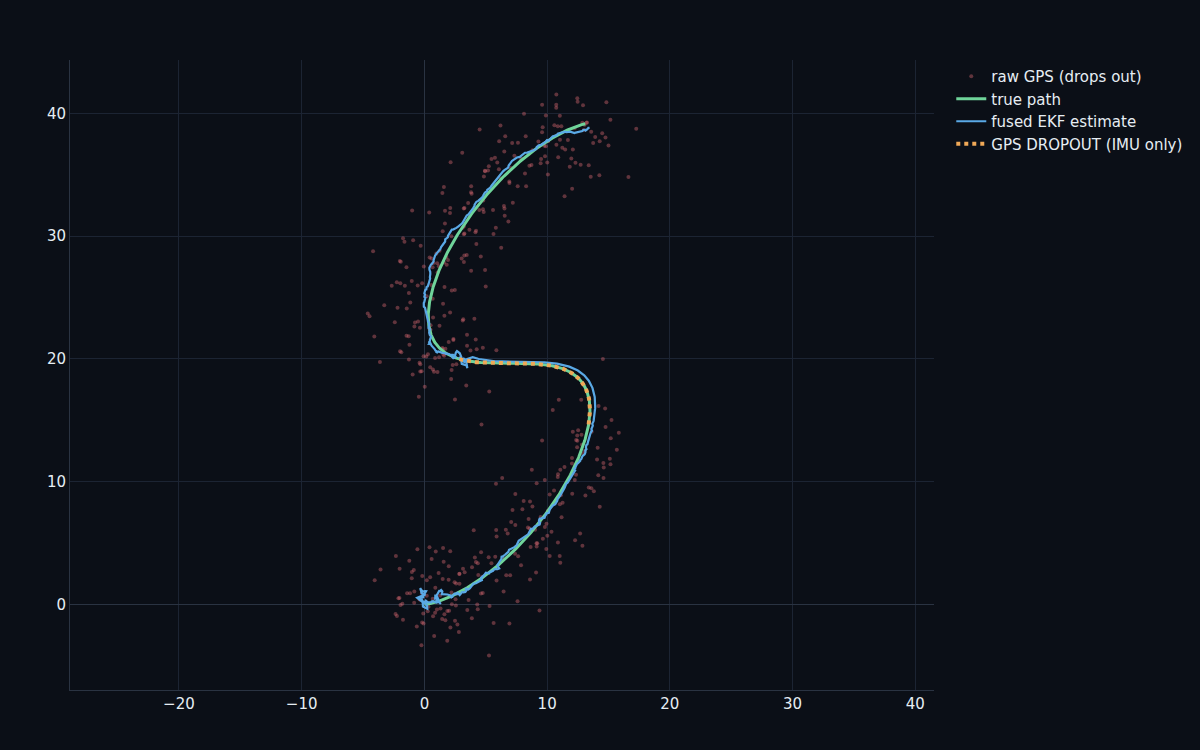
State estimation
Recovering hidden state from noisy sensors with the Kalman family — linear KF, EKF and UKF, then GPS+IMU sensor fusion that holds a track straight through a GPS dropout, an EKF battery State-of-Charge estimator, and the consistency and outlier-rejection machinery that says when a filter can be trusted.
Read the case study →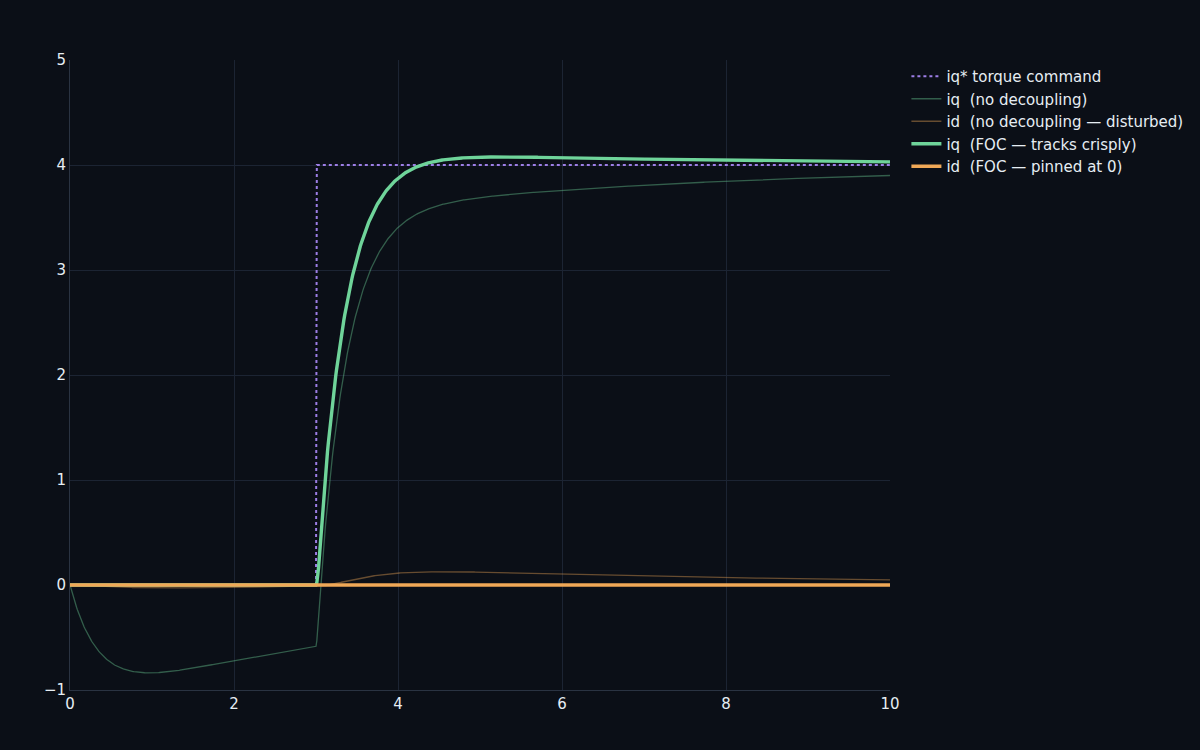
Power electronics & FOC
From raw switching power electronics to smooth torque: a PWM buck converter and its averaged model, the PMSM dq machine, field-oriented control decoupling torque from flux, carrier PWM, a cascade speed loop, and field weakening — the inverter and control layer under an EV powertrain.
Read the case study →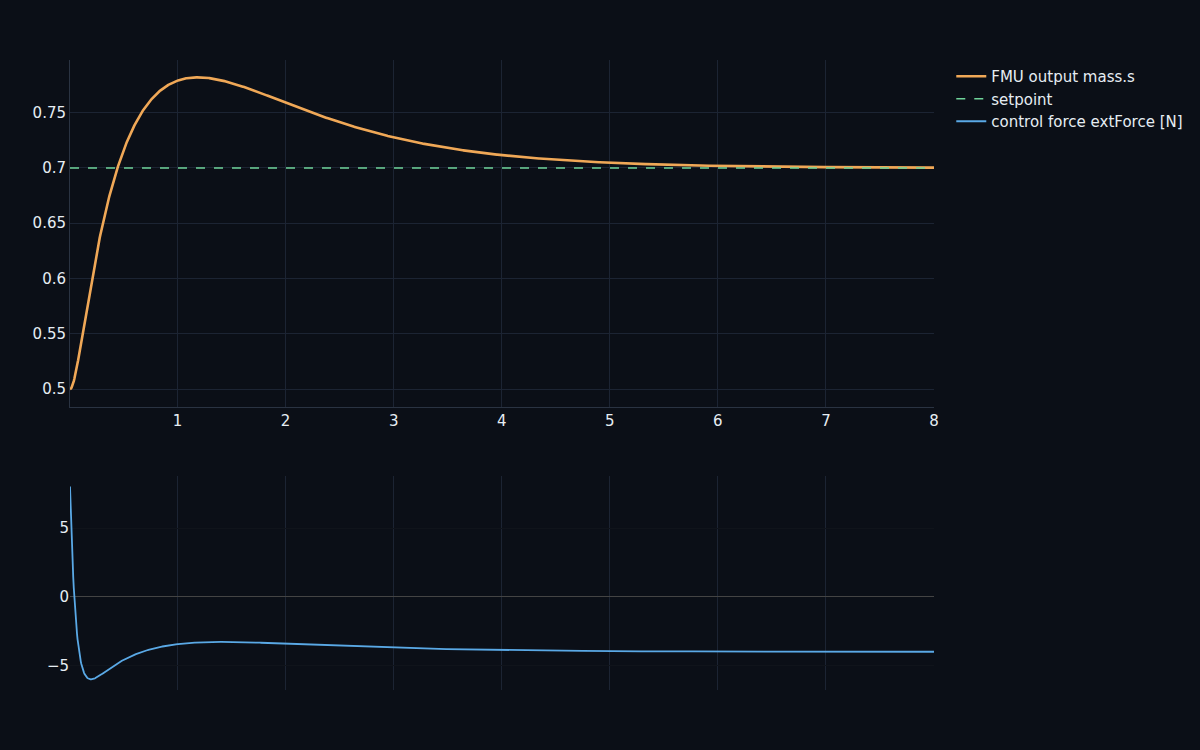
FMI co-simulation
Importing and co-simulating vendor models through the FMI standard — load a Dymola FMU and run it, cross-validate it against a native model, wrap your own controller around the black box through the FMI interface, couple it into a larger system, and quantify the co-simulation error.
Read the case study →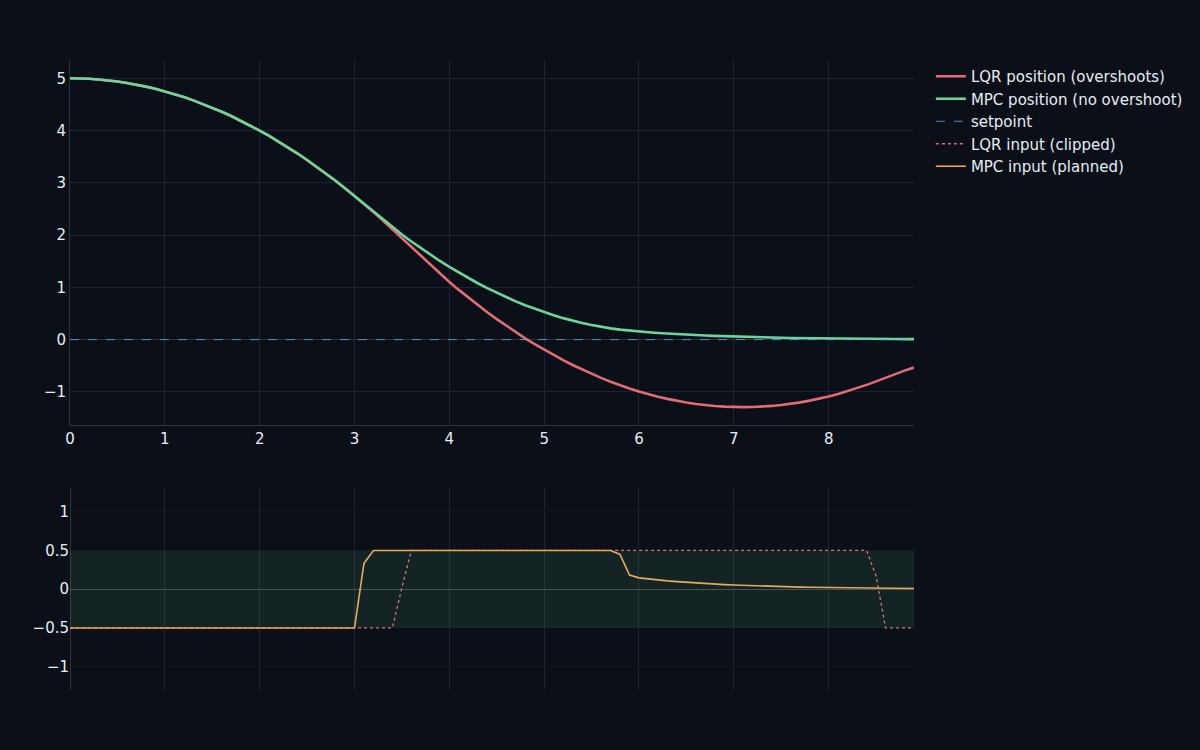
Model predictive control
Putting an optimizer inside the control loop — plan over a horizon subject to hard constraints. The LQR baseline, the correctness anchor that unconstrained MPC equals LQR, constraint handling where LQR saturates and overshoots, offset-free tracking, and a real HVAC zone.
Read the case study →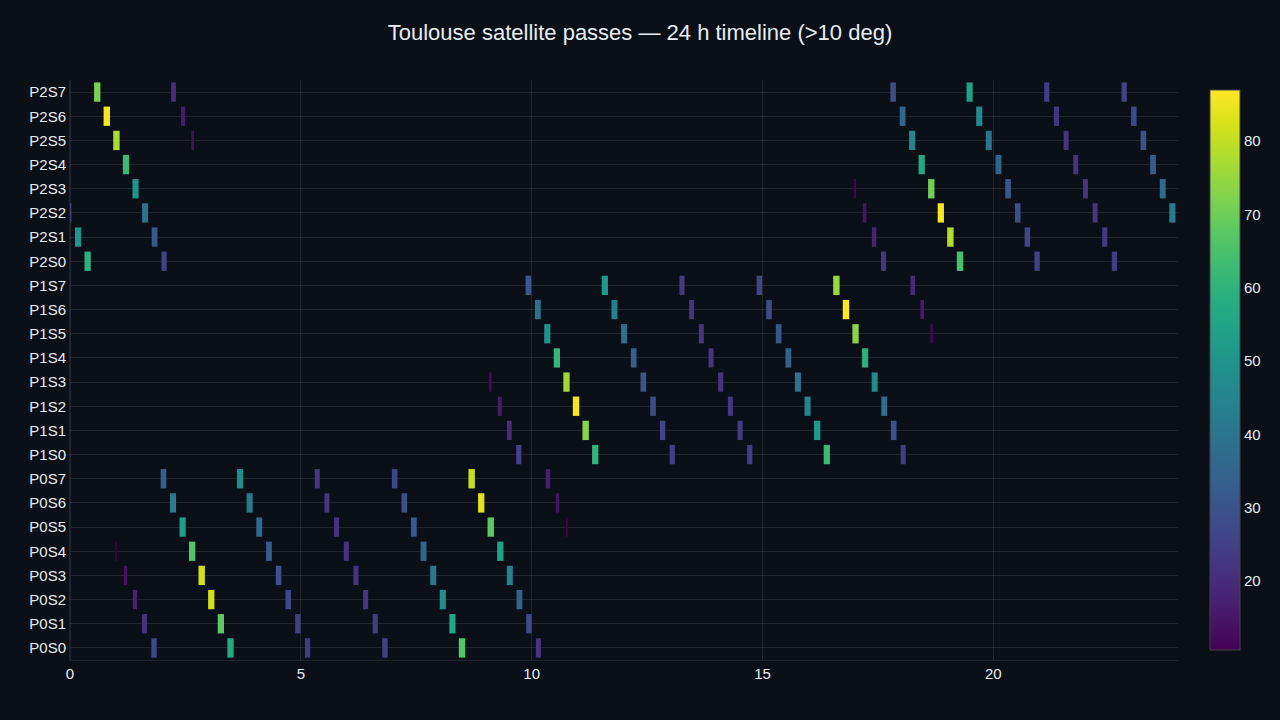
Satellite constellation
A 24-satellite Walker constellation, designed end to end — orbit propagation with J2, ground tracks and coverage, ground-station contact windows, a fleet-sizing trade, and a verification gate, all over a 3D globe.
Read the case study →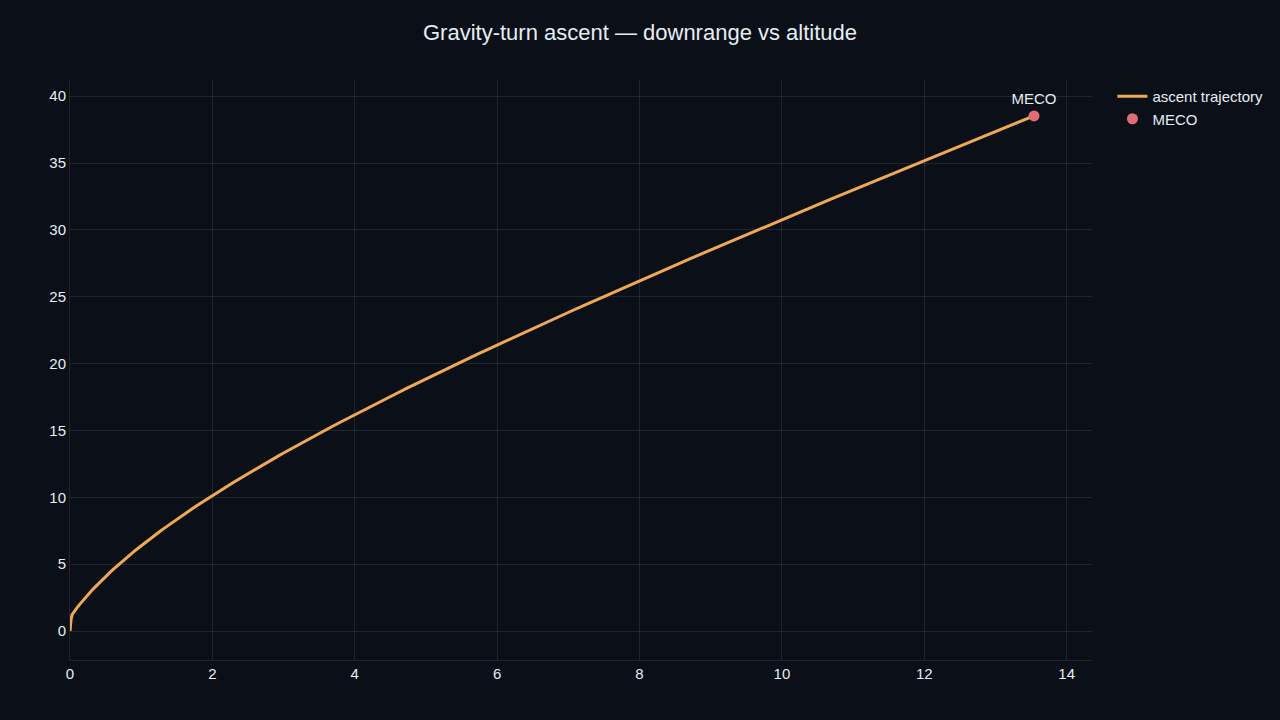
Reusable rocket
A reusable launch vehicle from liftoff to landing — gravity-turn ascent, staging, a propulsive suicide-burn touchdown, a thrust-vector attitude loop, and a 500-trial landing-dispersion analysis, the descent flown over a 3D globe.
Read the case study →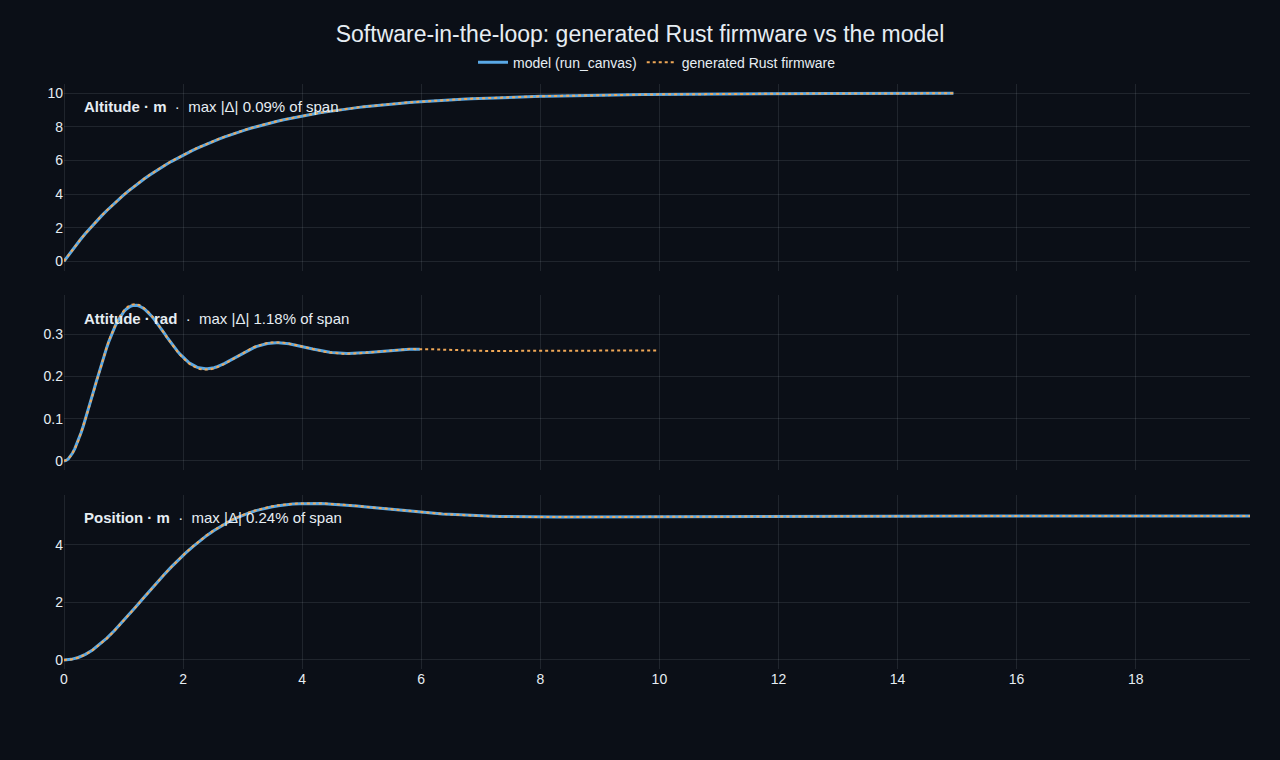
Model → Rust firmware
Model-based design to deployable code, the Rust-first way — an autopilot designed as block diagrams, code-generated to #![no_std] Rust, proven equivalent to the model, cross-compiled to a Cortex-M target, and attested for provenance.
Read the case study →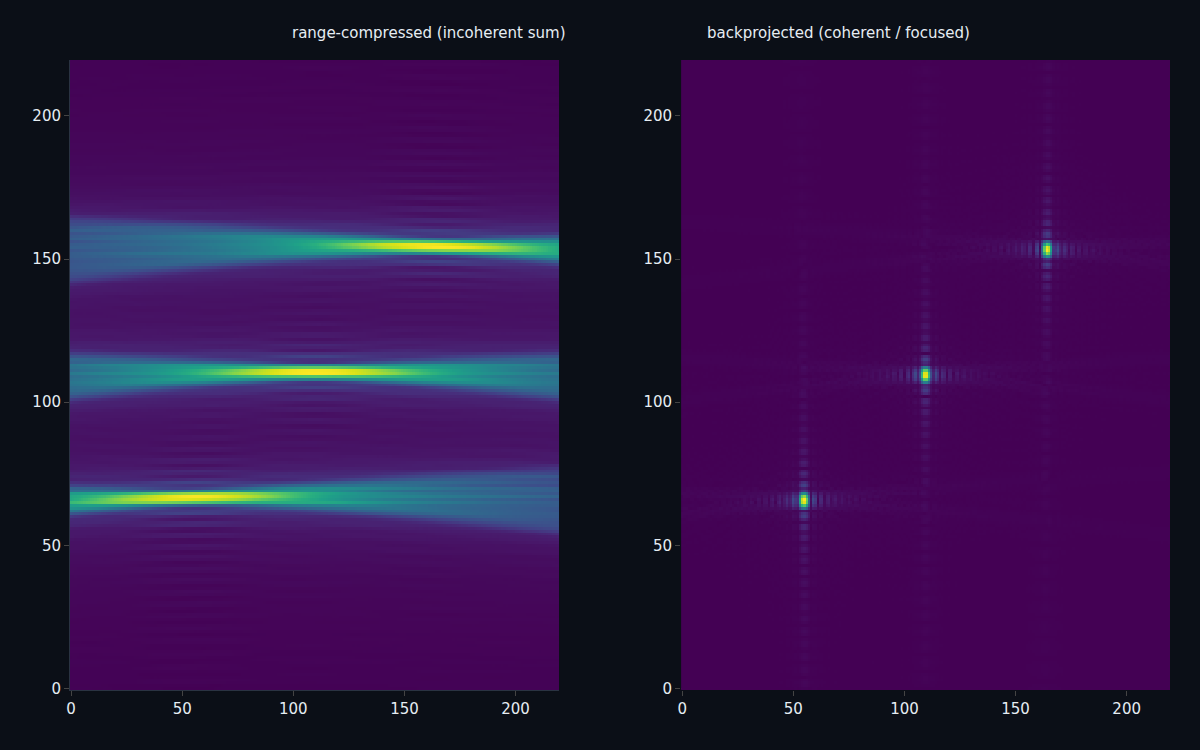
Synthetic aperture radar
Forming a focused radar image from raw returns — the chirp and pulse compression, the raw phase-history smear, backprojection focusing that beats the real antenna beamwidth, autofocus, and then the focusing kernel emitted as memory-safe Rust and cross-compiled to commodity ARM.
Read the case study →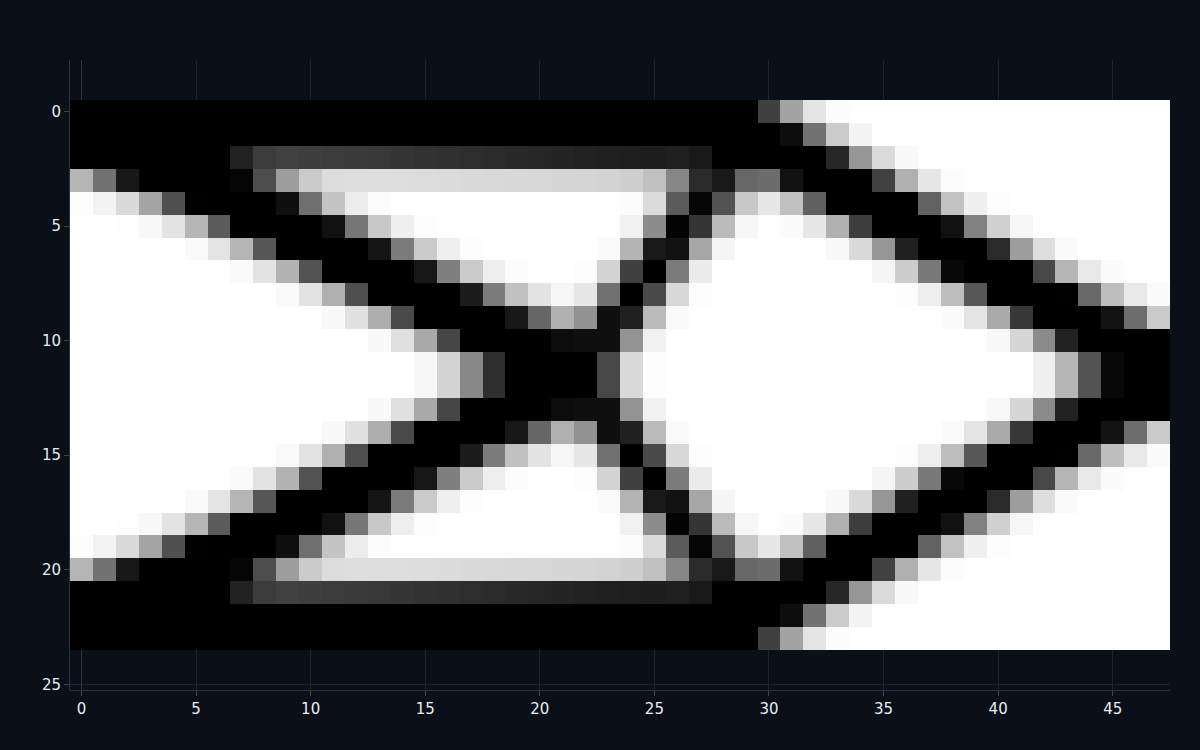
Topology optimization
Don't design the part — let the optimizer discover it. Given a load, supports and a material budget, topology optimization decides where to put material to make a structure as stiff as possible, growing the organic, truss-like forms of generative design. FEM in the loop with adjoint sensitivities.
Read the case study →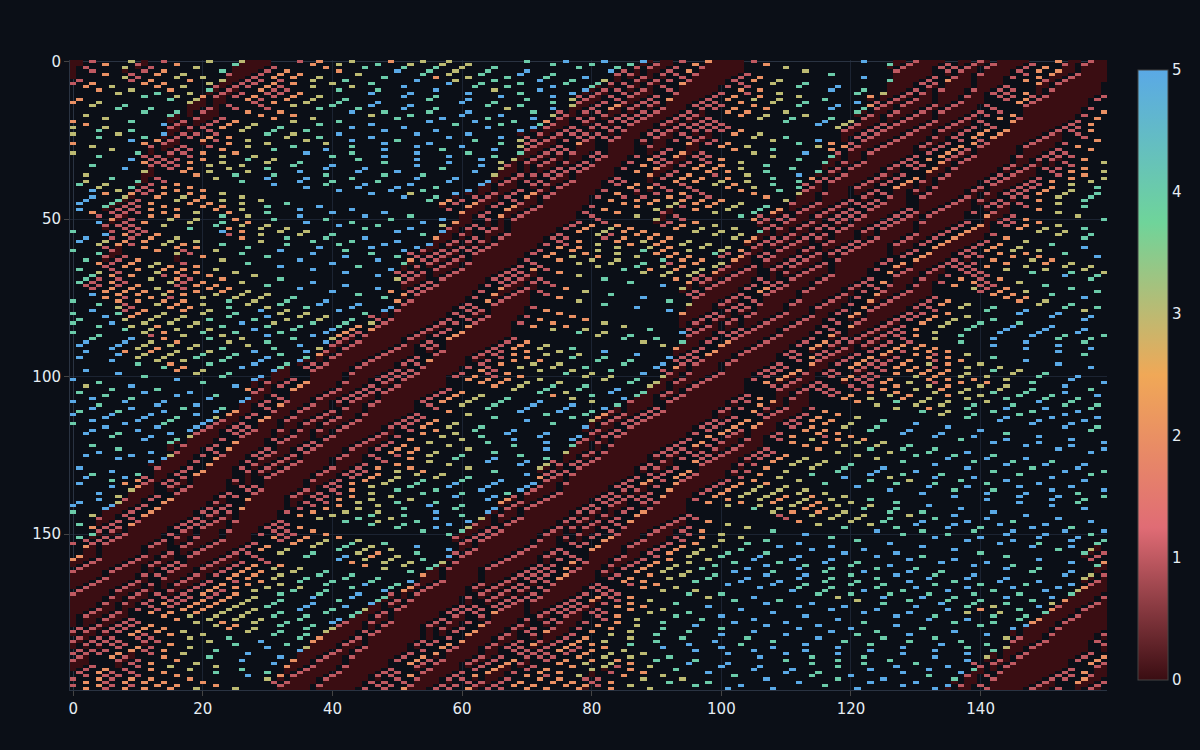
Discrete-event & agent-based
The other kind of simulation — systems that jump at discrete events and agents that follow simple rules. Queues validated against queueing theory, a manufacturing line and its bottleneck, and traffic jams that emerge from nothing: the event-driven and agent-based paradigm, not differential equations.
Read the case study →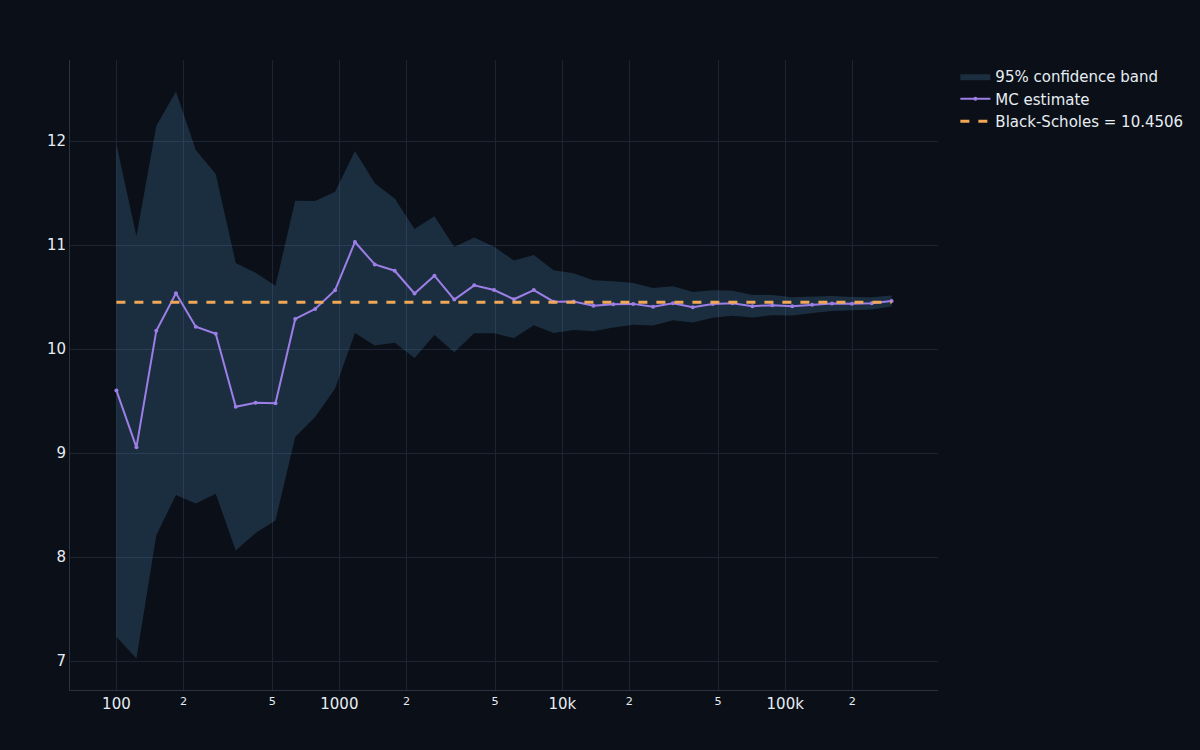
Stochastic & quant finance
Simulation driven by randomness — Brownian motion, stochastic differential equations and Monte Carlo. Option prices that converge to Black–Scholes, variance reduction, path-dependent exotics, the Greeks, Value-at-Risk, and a volatility smile: the stochastic-calculus paradigm nothing else in the portfolio touches.
Read the case study →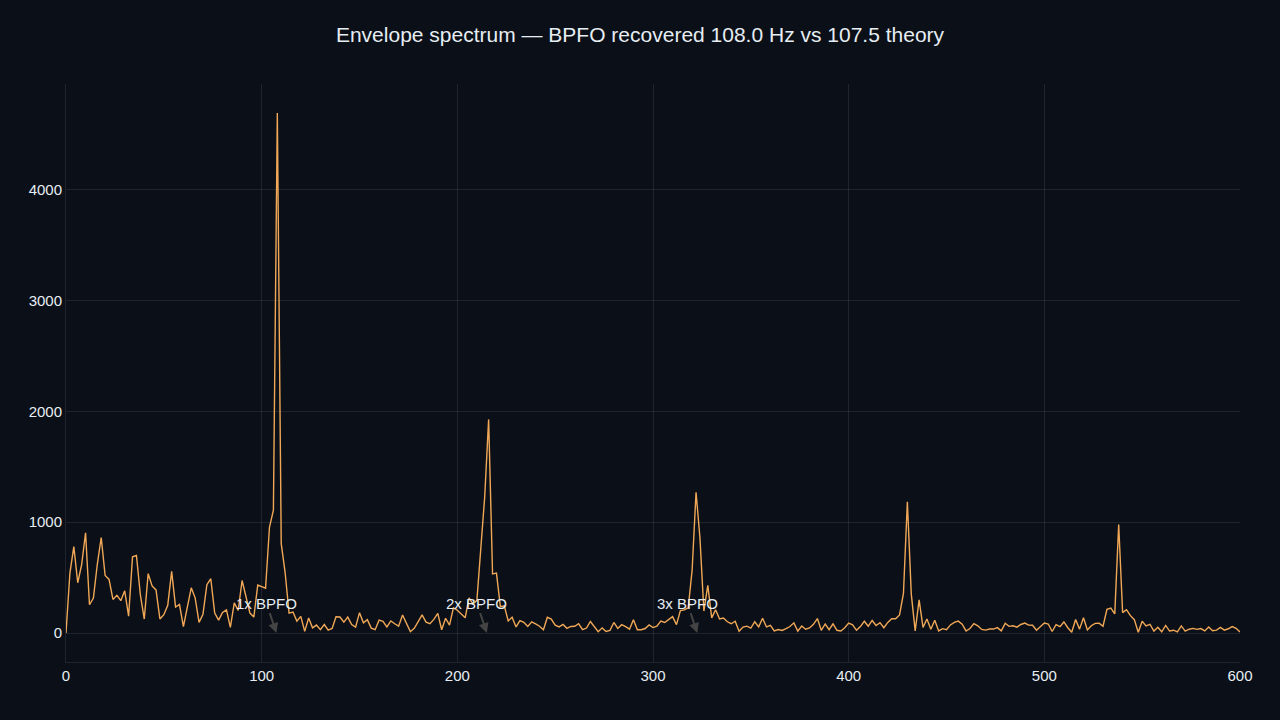
Predictive maintenance
A digital twin that hears a bearing fail before it does — synthetic vibration, envelope analysis, a kurtogram, a neural classifier, and a remaining-useful-life estimate, on one rotating-asset model.
Read the case study →Ready to model your system?
Book a guided demo and we'll walk through a digital replica of a system from your domain.